 Editorial Team
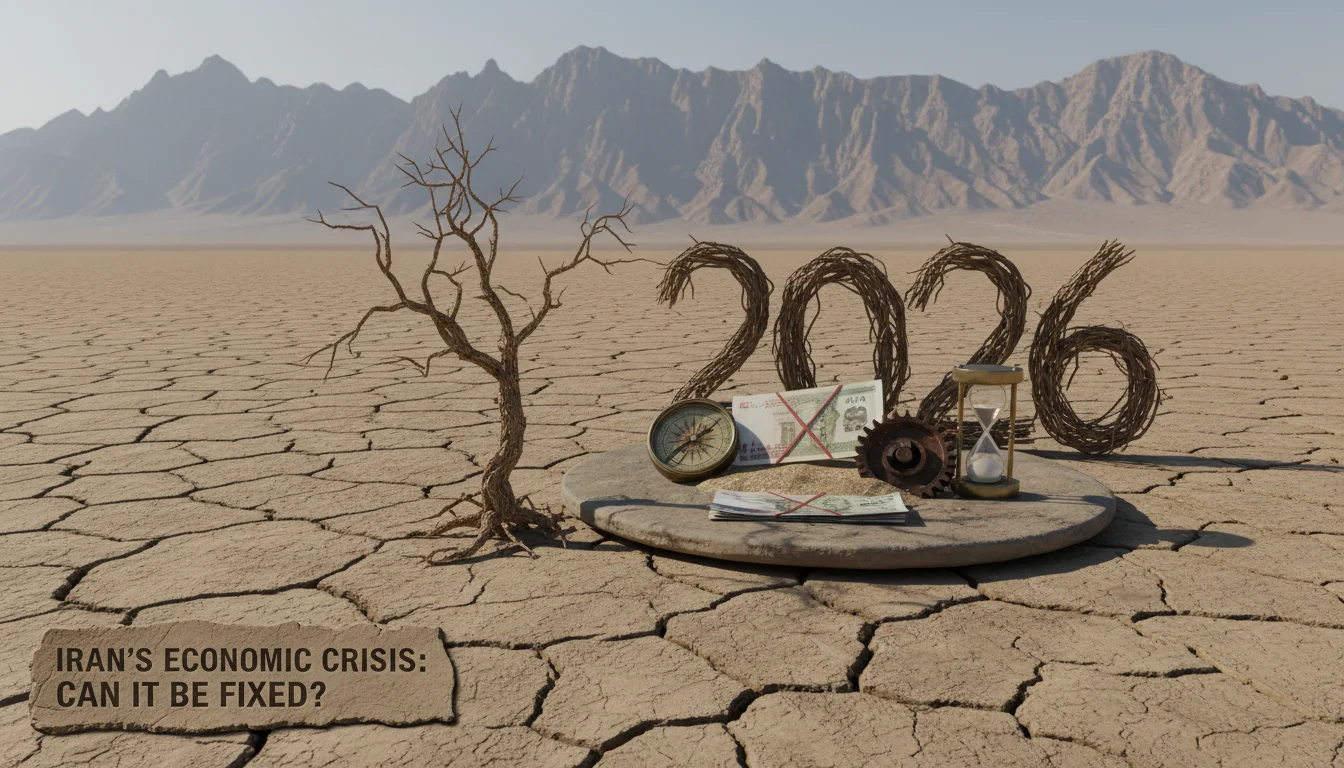
Iran’s economy in 2026 is caught in a perfect storm, driven by relentless international sanctions and a long history of disastrous domestic economic policy. The country is being hammered by runaway inflation and a currency in freefall, with limited access to global markets making daily life a struggle for millions. The administration faces a monumental challenge in steering toward stability, and it’s an open question whether these deep-rooted problems can be solved at all.
Key Takeaways
- Annual inflation blew past 40% in late 2025, devastating the purchasing power of average Iranian families.
- The rial has plummeted over 30% against the US dollar in the last year, sending import costs through the roof and creating widespread uncertainty.
- Oil exports, the economy’s traditional backbone, are still choked by international sanctions, which severely limits the government’s access to foreign cash.
- Everyone agrees structural economic reforms like fighting corruption and diversifying the economy are needed, but they keep hitting a wall of political resistance.
- Despite the pressure, Iran is trying to bypass sanctions by building up non-Western trade relationships, especially with Asian countries.
The Stranglehold of Sanctions: A Persistent Economic Burden
The US pulling out of the Joint Complete Plan of Action (JCPOA) and reimposing sanctions in 2018 completely changed the game for Iran’s economy. The main goal of these measures was to cut off Iran’s ability to sell its primary export, oil, on world markets, and they’ve been brutally effective. While some back-channel deals and illicit sales get through, the overall revenue is a shadow of what it once was. A recent IMF report estimated that Iran’s oil income in 2025 was less than half of its 2017 peak, blowing a gigantic hole in the government budget needed for essential services.
The sanctions go far beyond oil, targeting Iran’s banking sector so aggressively that it’s next to impossible for Iranian firms to conduct international trade. Because they’re cut off from major global payment systems, any transactions must be routed through convoluted and risky back-channels, which adds huge costs. This isolation has completely scared off foreign investment, the very thing needed to modernize Iran’s industries and create jobs. Major corporations won’t touch the country, fearing the legal and reputational backlash. The fallout of this affects everyone, creating real shortages of everything from pharmaceutical imports to spare parts for vital infrastructure.
Then there are the secondary sanctions, which threaten any third-country entity for doing business with Iran, creating a chilling effect that’s far broader than the direct prohibitions. Banks and companies worldwide are playing it safe, choosing to steer clear of any deal that might be even remotely perceived as a violation. This “de-risking,” while logical from a corporate standpoint, just tightens the economic noose. It limits even humanitarian trade which is technically exempt. In practice, the challenge of finding a willing bank or shipping company is often too great, leading directly to the critical shortages of medicine and medical equipment that aid groups like Doctors Without Borders (doctorswithoutborders.org) repeatedly warn about.
Domestic Policy Failures: Fueling the Crisis from Within
You can’t just blame outsiders for this mess. Iran’s economic woes are also a homegrown disaster, stemming from years of bungled domestic economic policy, endemic corruption, and a total lack of transparency. The government’s addiction to oil money has always discouraged diversification, leaving the entire economy exposed when oil prices or sales volumes drop. And when the oil money does dip, the government’s go-to moves are printing more rials or draining national reserves, both of which just pour gasoline on the inflation fire.
For ordinary Iranians, inflation is the most painful part of this crisis. The government’s own Statistical Center of Iran confirmed annual rates were consistently over 40% all through 2025, and food prices were climbing even faster. This constant spike in the cost of living just demolishes people’s savings and pushes more and more families into poverty. The knock-on effects are everywhere: people can’t afford necessities, businesses can’t handle the unpredictable costs, and long-term investment is a fantasy. I’ve seen it in other economies under duress. When people can’t financially plan more than a few weeks ahead, economic activity simply grinds to a halt.
The country’s financial sector is its own special disaster. State-owned banks are zombies, propped up by the government while being buried under a mountain of non-performing loans and stuck in the 1970s when it comes to governance. At the same time, the parallel currency market, the black market, where the rial is worth far less than the official rate, distorts the entire economy and creates massive opportunities for arbitrage. This two-tiered system is a gift to well-connected insiders who can get cheap foreign currency, while regular citizens and legitimate businesses are forced to buy it at the hugely inflated market rate. This setup doesn’t just breed corruption, it makes it nearly impossible for an honest exporter to repatriate their earnings at a fair price.
Currency Depreciation and its Impact
The Iranian rial is in a death spiral, having lost over 30% of its value against the US dollar on the unofficial market in the last 12 months alone. This freefall makes anything imported, from essential medicines to industrial machinery, prohibitively expensive, which just creates more inflationary pressure. Companies that need imported materials see their costs skyrocket, and they have no choice but to pass that on to consumers. For a typical Iranian, any savings they hold in rials are losing value by the day, sparking a desperate rush to convert their money into gold or foreign currency, which only puts more pressure on the rial.
“Assistant Commissioner Laurence Taylor said the release of the five men on police bail in September had raised significant questions and speculation about the investigation for members of the public.”
The Social and Human Cost of Economic Distress
These economic numbers translate into real human suffering. Unemployment, especially for young people, is dangerously high, feeding social unrest and a brain drain of educated professionals who see no future in the country. The World Bank (worldbank.org) has been pointing out for years that the income gap between the rich and poor in Iran is widening into a chasm. With government revenues in the tank, public services are crumbling, making access to decent healthcare, education, and housing a dream for a huge part of the population.
Food security is another massive concern. As food prices soar and wages stagnate, many families can no longer afford adequate nutrition. Forget what the official statistics say. The reality reported by NGOs in the region is that a growing number of people are depending on food aid and suffering from dietary deficiencies. This economic data represents a slow-motion humanitarian crisis, one that is damaging the health and future of an entire generation and showing how macroeconomic policy has deeply personal consequences.
Attempts at Adaptation and Resilience
Even under all this pressure, Iran has found ways to adapt. The government has pushed a “look to the East” policy to build stronger trade relationships with countries like China, India, and Russia, often using barter systems and local currency settlements to get around US sanctions. For instance, reports from Reuters (reuters.com) have documented a rise in oil shipments to China, frequently on tankers that have gone “dark” to avoid being tracked, though Iran has to sell this oil at a major discount.
Internally, there’s been a big push for a “resistance economy,” which is a state-led effort to boost self-sufficiency and local production. This has produced some results, particularly in the defense sector and for some industrial goods, but it’s an inefficient model that sacrifices quality and technological progress by cutting itself off from the world. The most agile players in this environment are often small and medium-sized enterprises (SMEs) that find creative ways to survive, but they’re in a constant battle to secure financing and raw materials. It’s a two-front strategy, look for new allies abroad and try to build more at home, born of necessity.
The informal economy has also exploded, offering a lifeline to millions but creating a huge headache for a government that can’t tax or regulate it. This shadow economy, while providing short-term relief for individuals, makes any kind of long-term national economic planning impossible. It puts the government in a bind: how do you support your citizens’ survival without legitimizing a black market that weakens the state’s own control and revenue streams?
The Road Ahead: Working through a Precarious Future
Looking toward 2026 and beyond, Iran’s economic path is completely up in the air. A revival of the JCPOA is a long shot, but even if it happened, the sanctions relief would only be a temporary fix. To truly get the economy back on its feet, Iran would need to commit to deep, painful structural reforms, cracking down on corruption, diversifying away from oil, and cleaning up the banking sector. The political will for such unpopular changes seems to be the critical missing ingredient. As we’ve seen elsewhere, political convenience almost always wins out over sound economic policy, leading to endless cycles of crisis.
The state of global energy markets is another wild card. Higher oil prices would certainly give Tehran a cash infusion, even under sanctions, but that’s a volatile factor well outside its control. In the end, Iran’s economic stability depends on a combination of geopolitical luck and internal policy guts. The current trajectory of high inflation, a collapsing currency, and global isolation is completely unsustainable. Real reform is an economic imperative that will define the nation’s future.
To understand Iran’s economic crisis, you have to see it as a product of both external pressure and internal rot. For any person or business trying to navigate this environment, constant risk assessment and a close eye on geopolitics are essential for survival. There’s no simple solution here. The only path forward for Iran’s economy involves a combination of difficult domestic reforms and some kind of breakthrough on the international sanctions front.
What is the primary cause of Iran’s current economic crisis?
It’s a two-part problem: crippling international sanctions that block oil sales and banking access, combined with the government’s own history of failed economic policies, including runaway inflation, currency mismanagement, and deep-seated corruption.
How has inflation impacted daily life in Iran?
With inflation running over 40% in 2025, the buying power of ordinary Iranians has been destroyed. The cost of basic goods like food, housing, and medicine has skyrocketed, pushing more people into poverty and making life economically insecure for almost everyone.
What role does the Iranian rial’s depreciation play in the economy?
The rial’s collapse makes imports incredibly expensive which raises costs for businesses and drives up prices for consumers. It also vaporizes the value of people’s savings and scares away any potential foreign investment because of the extreme instability.
Is Iran attempting to counter the effects of sanctions?
Yes, Iran is trying to fight back by building trade relationships with non-Western powers like China and Russia, often using barter or other workarounds. It’s also pushing a “resistance economy” to encourage domestic production and reduce reliance on imports.
What are the long-term prospects for Iran’s economy?
The future is uncertain and rests on two big “ifs”: if they can get some relief from international sanctions, and if the government can find the political will to enact serious domestic reforms like fighting corruption and modernizing the financial system.


