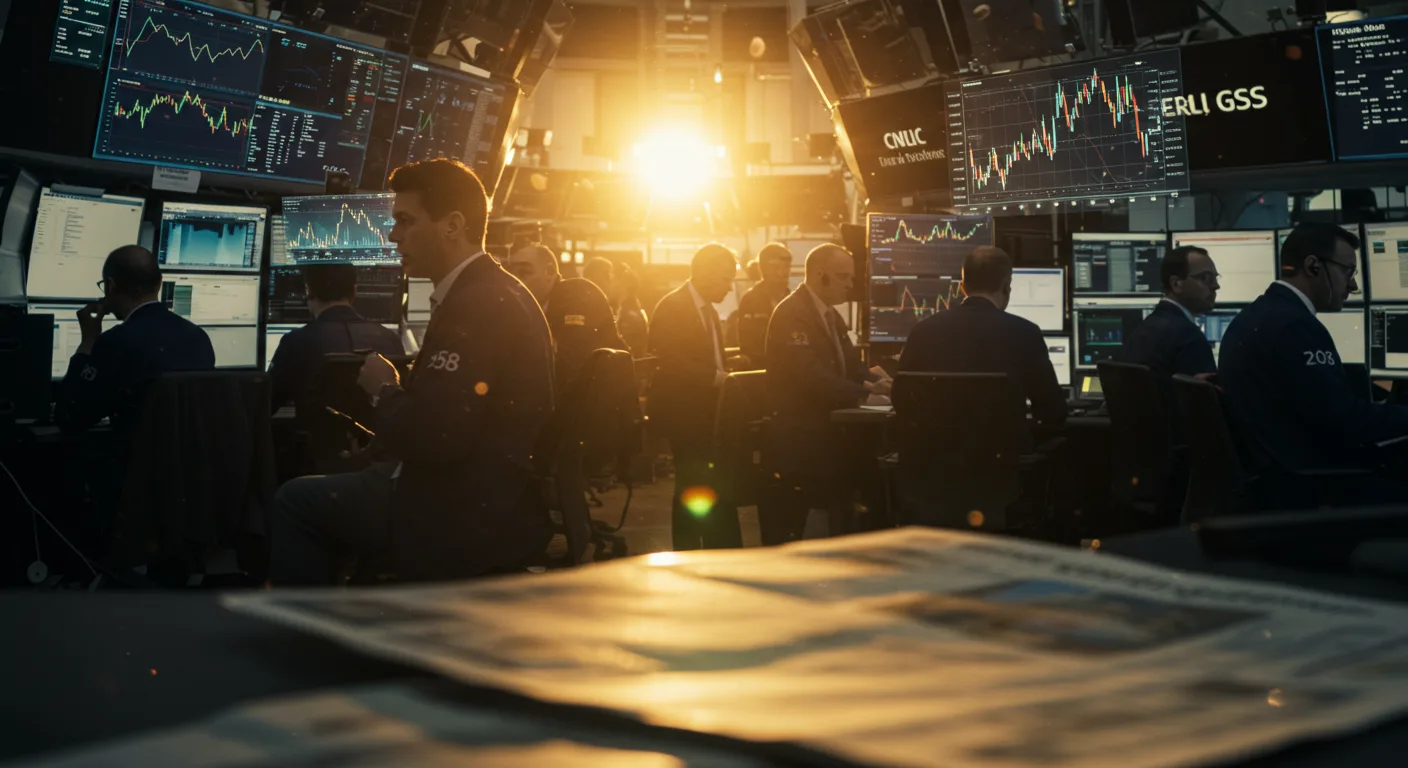
The year 2026 presents a relentless torrent of data, geopolitical shifts, and technological disruptions, making the task of empowering professionals and investors to make informed decisions in a rapidly changing world more critical than ever. We at Global Insight Wire believe that clarity amidst chaos isn’t just an aspiration; it’s a necessity for survival and growth. But how do you cut through the noise when the very foundations of markets and industries seem to shift beneath your feet?
Key Takeaways
- Implement a diversified data acquisition strategy, combining traditional wire services with specialized alternative data platforms to gain a holistic market view.
- Prioritize continuous learning and skill development in data analysis and behavioral economics to interpret complex information effectively.
- Adopt a structured decision-making framework that incorporates scenario planning and stress testing to mitigate risks from unforeseen global events.
- Invest in AI-powered analytical tools for predictive modeling and anomaly detection, specifically targeting market sentiment and supply chain vulnerabilities.
- Cultivate a network of diverse expert opinions, recognizing that even the most advanced algorithms benefit from human intuition and contextual understanding.
I remember Sarah Chen, the lead portfolio manager at Meridian Capital, describing her frustration to me just last year. Her firm, a mid-sized asset management group based out of the Atlanta Financial Center on Peachtree Street, had built its reputation on solid, long-term value investing. But by late 2025, their traditional models, heavily reliant on historical financial statements and macroeconomic indicators from sources like the Bureau of Economic Analysis (BEA), were simply not capturing the full picture. “Our projections for the semiconductor industry were off by nearly 15% in Q3,” she confided, “and it wasn’t just a missed earnings call. It was a ripple effect from a geopolitical incident in Southeast Asia that our usual news feeds barely covered, let alone analyzed for its supply chain implications.” Sarah’s team felt like they were constantly playing catch-up, reacting to events rather than anticipating them. This wasn’t just about losing a few basis points; it was about the fundamental erosion of their analytical edge.
Her problem is far from unique. The sheer volume of information available today can be paralyzing. Traditional news cycles, while still vital for factual reporting, often lack the depth of analysis required to understand second and third-order effects. As I often tell my team, a headline tells you what happened, but rarely why it matters to your specific investment or operational strategy. What Sarah needed was not more data, but better, more contextualized insights – a shift from information consumption to intelligence generation.
The core of Meridian Capital’s dilemma lay in their reliance on conventional data sources. While Reuters (Reuters) and the Associated Press (AP News) remain indispensable for real-time factual reporting, they are designed for broad consumption. For specific, actionable intelligence, a more granular approach is necessary. We advised Sarah to diversify her information diet, moving beyond just financial news wires. This meant exploring specialized geopolitical risk assessments from firms like Stratfor (Stratfor Worldview) and integrating alternative data sources. For instance, tracking shipping manifests through platforms like MarineTraffic or analyzing satellite imagery for industrial activity can provide early warnings long before official reports are released. This isn’t about discarding the old; it’s about augmenting it with new, often unconventional inputs.
One of the biggest blind spots for many professionals is the failure to incorporate behavioral economics into their decision-making frameworks. We often assume rational actors, but market movements are frequently driven by fear, greed, and herd mentality. A report by the Pew Research Center (Pew Research Center) in late 2025 highlighted a significant increase in retail investor participation fueled by social media sentiment, often detached from fundamental valuations. Understanding these psychological undercurrents is as important as understanding balance sheets. Sarah’s team, for example, initially dismissed certain volatile stock movements as irrational. We pushed them to consider how online discussions on platforms like Discord or X (formerly Twitter) could amplify minor news events into significant market shifts. It’s a messy reality, but ignoring it costs money.
Our approach with Meridian Capital involved a multi-pronged strategy. First, we helped them implement an intelligence aggregation platform – think of it as a custom news dashboard on steroids. Instead of sifting through dozens of individual news sites, this platform, built on an open-source framework and customized by a local Atlanta tech firm, TechBridge, pulled in feeds from diverse sources: traditional wire services, specialized industry journals, geopolitical analysis firms, and even curated social media intelligence. The key wasn’t just collection, but intelligent filtering and prioritization using natural language processing (NLP) to flag relevant keywords and sentiment shifts specific to their portfolio holdings.
Second, we introduced them to the concept of scenario planning. Instead of forecasting a single future, they began mapping out several plausible futures, each with different geopolitical, economic, and technological assumptions. What if a major cyberattack disrupted global banking? What if a new trade bloc emerged in Africa, bypassing traditional supply chains? This wasn’t about predicting the future, but about preparing for multiple potential realities. For instance, their semiconductor analysis improved dramatically when they started modeling scenarios that included raw material export restrictions from specific nations, rather than just assuming stable supply lines. This proactive approach allowed them to identify potential vulnerabilities and develop contingency plans, like sourcing alternative materials or diversifying manufacturing partners, long before a crisis hit.
I had a similar experience with a manufacturing client in Smyrna, Georgia, just last year. They were heavily reliant on a single supplier for a critical component, and their risk assessment was rudimentary. When I pressed them on geopolitical risks, they shrugged, saying “that’s too far outside our control.” We ran a scenario where a localized conflict in the supplier’s region escalated, disrupting shipping lanes. Within weeks of that exercise, a real-world political protest in that very region caused a temporary port closure. Because they had already identified alternative suppliers and had a pre-negotiated contingency contract, they avoided a production shutdown that would cost them millions. The difference between foresight and hindsight, in business, is often the difference between profit and loss.
The role of artificial intelligence (AI) in decision-making cannot be overstated, but it must be applied judiciously. AI isn’t a silver bullet; it’s a powerful tool for pattern recognition and predictive modeling when fed the right data and guided by human expertise. Meridian Capital began experimenting with AI models to analyze market sentiment from earnings call transcripts and analyst reports. They used Palantir Foundry to correlate public sentiment with specific stock movements, identifying anomalies that human analysts might miss. For example, the AI flagged a subtle but consistent negative tone in discussions about a seemingly stable tech company, even as its stock price held firm. A deeper dive revealed growing concerns about internal management conflicts, which eventually surfaced publicly, causing a significant stock drop. The AI provided an early warning signal, allowing Sarah’s team to adjust their position.
Here’s what nobody tells you: the most sophisticated AI model is only as good as the human intellect guiding it. You need experts who understand the nuances of the data, who can ask the right questions, and who can interpret the AI’s output within a broader context. Blindly trusting an algorithm is a recipe for disaster. We spent significant time training Meridian Capital’s analysts not just on how to use the AI tools, but on how to critically evaluate their results, recognizing potential biases or limitations in the data sets. This blend of technological prowess and human critical thinking is where true informed decision-making resides.
For investors, this means developing a robust due diligence process that incorporates both quantitative analysis and qualitative insights. Don’t just look at the numbers; understand the narrative, the people, and the external forces at play. For professionals, it means fostering a culture of continuous learning and adaptability. The skills that were valuable five years ago may be obsolete today. Invest in training your teams in data literacy, critical thinking, and geopolitical awareness. The Georgia Department of Economic Development (Georgia.org) offers various programs and resources for workforce development that can be incredibly beneficial in this regard.
Ultimately, empowering professionals and investors to make informed decisions in a rapidly changing world isn’t about having a crystal ball. It’s about building a resilient, adaptable framework that combines diverse data sources, advanced analytical tools, and most importantly, sharp human intellect. It means moving from a reactive stance to a proactive one, constantly questioning assumptions and seeking out new perspectives. Sarah Chen and Meridian Capital learned that the hard way, but their transformation stands as a testament to the power of a deliberate, informed approach. To learn more about how other businesses are navigating challenges, consider reading about AI & ESG challenges in 2026.
To truly thrive in 2026 and beyond, professionals and investors must proactively cultivate a multifaceted intelligence ecosystem, blending traditional analysis with cutting-edge tools and a deep understanding of human factors.
What is the primary challenge for decision-makers in 2026?
The primary challenge is making informed decisions amidst an overwhelming volume of rapidly changing information, geopolitical shifts, and technological disruptions, often leading to analysis paralysis or reactive strategies.
How can traditional data sources be augmented for better insights?
Traditional sources like financial news wires should be augmented with specialized geopolitical risk assessments, alternative data (e.g., shipping manifests, satellite imagery), and curated social media intelligence to provide deeper, more contextualized insights.
Why is scenario planning crucial for investors and professionals?
Scenario planning is crucial because it moves beyond single-point forecasting to map out multiple plausible futures, allowing organizations to identify potential vulnerabilities, develop contingency plans, and prepare for various geopolitical, economic, and technological realities before they occur.
What role does AI play in improving decision-making, and what are its limitations?
AI can significantly improve decision-making by identifying complex patterns, analyzing market sentiment, and providing predictive modeling. However, its limitations include reliance on the quality of its input data and the necessity of human expertise to interpret results, recognize biases, and apply contextual understanding.
What is the most critical factor for successful informed decision-making?
The most critical factor is the integration of diverse data sources, advanced analytical tools, and sharp human intellect, fostering a culture of continuous learning, critical thinking, and adaptability to move from a reactive to a proactive stance in an unpredictable world.












